
The Rite of Clarity
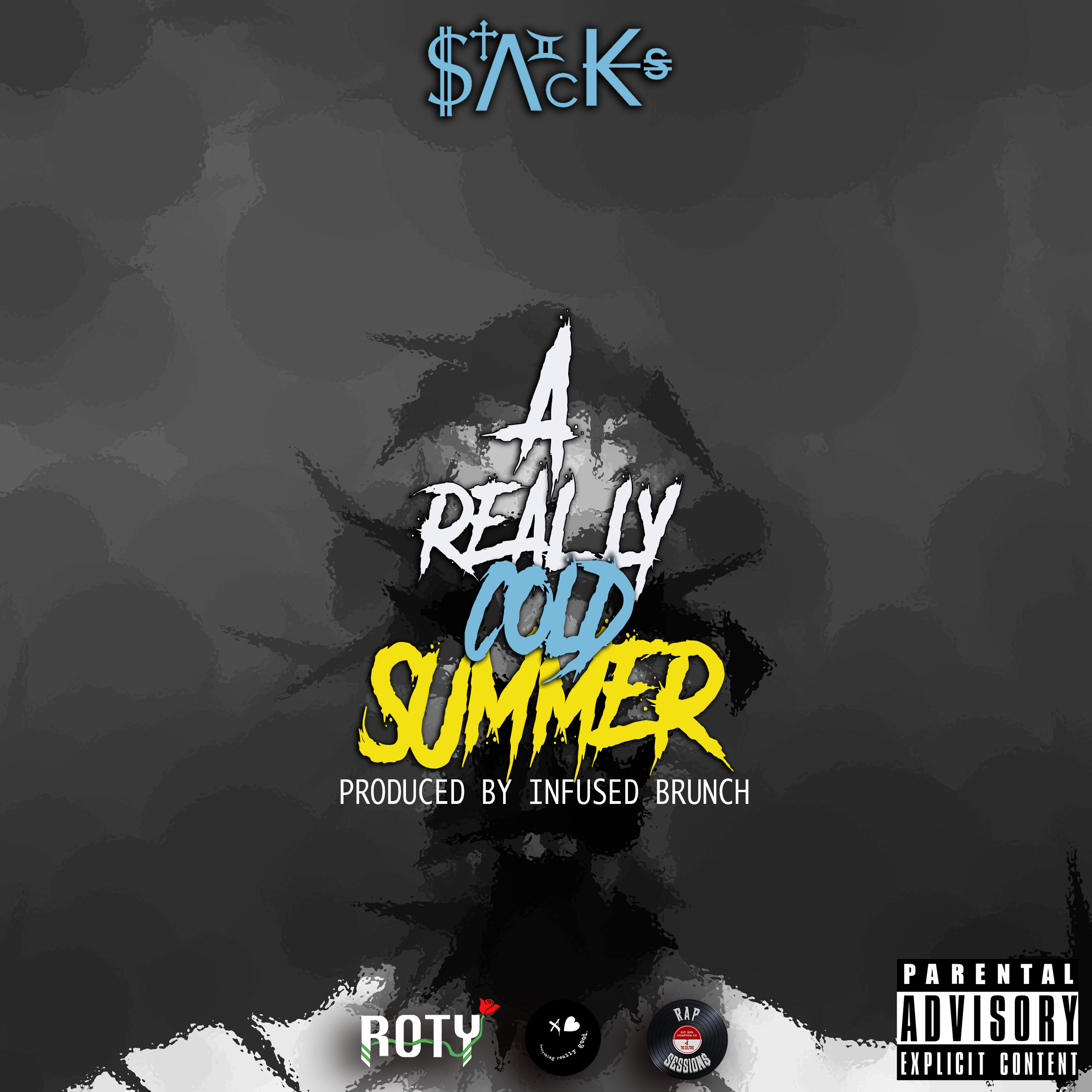
A Really Cold Summer
Deucestacks × Infused Brunch
Every family passes something down.
Sometimes it’s resilience.
Sometimes it’s faith.
Sometimes it’s silence.
And sometimes... it’s wounds no one intended to leave behind.
On A Really Cold Summer, Deucestacks spends twelve songs examining what he inherited before confronting the question that quietly defines the entire album:
What will I choose to pass on?
Produced entirely by Infused Brunch, A Really Cold Summer is less interested in documenting success than understanding the emotional architecture beneath it.
The title itself is a contradiction.
Summer is supposed to represent warmth. Abundance. Freedom. Growth.
Yet this summer unfolds inside an emotional climate shaped by scarcity, fractured relationships, survival, ambition, love, and redemption.
The sun is still shining.
But the people underneath it are learning how to thaw.
The journey begins with “Can’t Land,” a declaration of restless ambition.
Deucestacks refuses to settle—not simply out of confidence, but because movement has become a form of survival.
Faith replaces certainty.
The ground represents limitation.
And the sky represents possibility.
But almost immediately, “Stuck” complicates that confidence.
Street lessons, family history, artistic independence, and relentless discipline reveal the environment responsible for creating the man we met on the opening record.
Then “Javelin” turns movement into trajectory.
The hunger is no longer simply about escaping where he came from.
It is about directing everything he survived toward somewhere greater.
And then...
the album looks backward.
“Back in the Days” strips away much of the armor.
Love is no longer approached with the anxiety of youth. As an adult, Deucestacks asks a more difficult question:
When you tell me what you want...
are you thinking about what we are becoming?
That question opens the emotional door for the records that follow.
On “Seconds Please!”, hunger becomes something darker.
“Abundance is deadly, my hunger it fed me” captures one of the album’s central contradictions: the same deprivation that creates ambition can make satisfaction nearly impossible.
If hunger built you...
what happens when you finally have enough?
And will you even recognize enough when it arrives?
That tension follows Deucestacks into “Leftortum,” where certainty begins collapsing under the weight of consequence.
He asks:
“I think that I’m right. Now where did it get me?”
It is a deceptively simple question.
Because for the first time, being correct becomes less important than understanding what being correct has cost.
And then comes “Glass Half Empty.”
The emotional center of A Really Cold Summer.
The first half of the record revisits Deucestacks’ parents’ relationship through the eyes of their son.
Two young people.
Two histories.
Two sets of wounds.
Love existing alongside trauma, fear, survival, mistrust and imperfect communication.
But halfway through the record, something happens.
The perspective changes.
The parents disappear.
And suddenly...
Deucestacks is talking about his own marriage.
His own separation.
His own pride.
His own communication.
His own mistakes.
The son who spent years observing his parents has become the husband recognizing echoes of their relationship inside his own.
That is where A Really Cold Summer reveals what it is truly interested in:
inheritance.
Not financial inheritance.
Emotional inheritance.
The behaviors we observe before we understand them.
The survival mechanisms we mistake for personality.
The ways our parents loved.
The ways they struggled to love.
And the terrifying moment when we recognize pieces of their story living inside ours.
But the album doesn't use inheritance as an excuse.
“Unlucky” begins the process of accountability.
“I don’t think I’m lucky. So used to adjusting.”
Adjustment has been Deucestacks’ superpower throughout the album.
Now he begins questioning its cost.
He confronts ego. Emotional distance. Miscommunication. The things he learned about masculinity and love from men who may never have been taught those things themselves.
Understanding where a behavior came from doesn't absolve him of responsibility for what that behavior becomes.
It simply gives him an opportunity to change it.
Then something remarkable happens.
The album starts getting warmer.
SISTASOUNDGOOD enters “Lady in the Sky” singing:
“I got my head in the clouds. I got both feet on the ground.”
After spending so much of the album inside Deucestacks’ internal world, another voice enters and lifts the music.
Her presence feels almost like reassurance.
The struggle hasn't disappeared.
But perspective has changed.
For the first time, dreaming and grounding are allowed to coexist.
And that opening toward possibility prepares us for “Anything.”
The song was inspired by a dream.
Deucestacks dreamed he had twin daughters.
When he woke up, he wrote to them.
Not as characters.
As his children.
He imagines their baby seats.
Matching clothes.
Watching them grow.
Watching them fall in love.
Watching them eventually have children of their own.
And suddenly the album's obsession with inheritance changes direction.
For most of A Really Cold Summer, Deucestacks has been looking backward and asking:
What did I receive?
“Anything” asks:
What will I give?
He tells his imagined daughters they can become anything.
But underneath the encouragement lies something even more profound.
He is imagining the father they would require him to become.
There is a moment when his protective instincts surface—he would do “devil things” for his angels.
Then he catches himself.
He thinks about the past.
And he remembers:
his girls need their dad.
That moment may contain the album’s entire transformation.
The younger man responds to danger by fighting.
The father understands that sometimes the most radical act of protection is remaining present.
From there, “Lisan al Giab” transforms reflection into purpose.
Art becomes weapon.
Creation becomes resistance.
Legacy becomes intentional.
“This sixteen got the Sistine touch” isn't merely a boast about lyrical ability.
It expresses the desire to create something capable of surviving its creator.
By now, Deucestacks is no longer asking why everything happened.
He is asking:
What can I build from it?
And finally...
“High Frequency.”
Featuring R. Stills, the closing record returns to the confidence of the album’s opening.
But something has changed.
The confidence no longer feels like armor.
It feels like conviction.
R. Stills speaks about taking chances, surviving circumstances and finding himself where he once felt like he was drowning.
Then Deucestacks delivers the image that quietly completes the entire album:
“Gardener now. I tend my seed.”
And suddenly...
we remember where the album started.
“I can’t land.”
The man who began the album refusing to touch the ground...
ends it planting something there.
That is A Really Cold Summer.
A story about a man who spends an album trying to understand what he inherited, only to realize that his greatest responsibility is deciding what he will pass on.
Parents become people.
A son becomes a husband.
A husband confronts himself.
A man dreams of becoming a father.
And survival slowly transforms into stewardship.
Infused Brunch’s production provides the landscape for that transformation, giving Deucestacks enough space to move between bravado and confession, memory and possibility, coldness and warmth without separating those contradictions into different worlds.
Because A Really Cold Summer ultimately refuses to simplify masculinity.
Strength and vulnerability aren't opposites here.
Neither are pride and accountability.
Neither are survival and tenderness.
The album understands that becoming a better man doesn't require pretending the previous version never existed.
It requires deciding what that version teaches the next one.
And perhaps that's why the title ultimately feels so appropriate.
Sometimes summer arrives...
and you're still carrying winter.
Sometimes everything around you looks warm while something inside you remains cold.
And sometimes healing isn't waiting for the weather to change.
It's learning how to create warmth yourself.
A Really Cold Summer begins with escape.
It ends with cultivation.
It begins with a man looking toward the sky.
It ends with his hands in the soil.
And somewhere between those two places, Deucestacks discovers that the greatest legacy isn't what we receive.
It's what we choose to leave behind.