
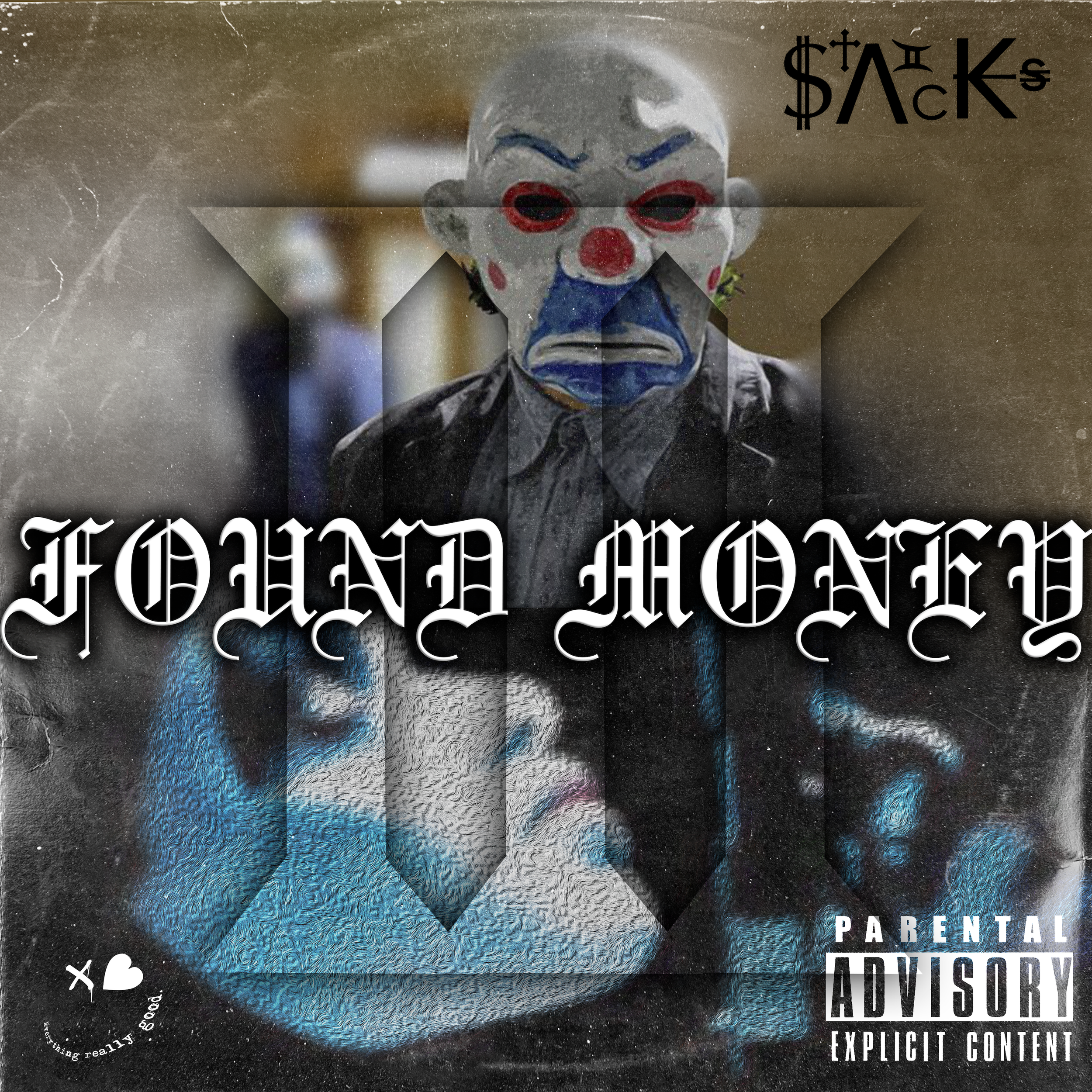
Found Money 3: What Was There the Whole Time
By Found Money 3, Deucestacks has taught you how to listen.
Found Money taught you to follow a word.
Found Money 2 taught you that a word can survive the song—or even the album—that introduced it.
So the third record begins with an assumption:
You know to remember.
A reference may be more than a reference. An image may disappear without being finished. A word used casually may be carrying something that began twenty songs earlier.
Nothing has to announce itself.
You just have to notice when it comes back.
And on Found Money 3, things start coming back everywhere.
THE STORIES BEGIN TO COLLIDE
On WTF, several worlds begin occupying the same language.
“World in my palm
Flick of the wrist”
The world enters the hand.
The image reaches toward something familiar: the whole world held in God's hands.
Then:
“we geeked inside
We ain’t acting meek tonight”
Meek opens another field: the meek inheriting the earth.
World becomes earth.
Holding becomes inheritance.
Then:
“Ghetto gospel
Glocks are preaching”
The language should already sound familiar.
Found Money gave us scripture.
Found Money 2 opened with:
“Preach”
Now the gospel itself is being preached.
Except the preacher is a gun.
Then come the Reaper and the expectation of Heaven.
Then pain.
Then crucifixion.
Then:
“dig your tomb”
Burial enters.
Scars and wounds follow.
But something else begins happening at the same time.
Force.
Light and dark.
A rebel.
A father's name.
Fear.
Anger.
Hate.
Star Wars has entered the passage.
And it isn't simply another collection of references.
The stories are running beside one another.
Luke.
Jesus.
Deuce.
Sons.
Fathers.
Inheritance.
Identity.
The mythology isn't replacing autobiography.
It is giving autobiography another language through which to speak.
SINNER / BELIEVER
That religious vocabulary doesn't disappear after WTF.
On Elegant Shit:
“Who make a sinner a believer”
Two words contain an entire transformation.
SINNER → BELIEVER.
Then Filthy:
“Razor sharp
Preacher crease”
The razor returns from Found Money 2.
So does the preacher.
Then Quik:
“I’m the god
Come get absolved”
Something has changed.
On the first Found Money, Deucestacks said:
“I'm ascending to a god.”
Later:
“I'm God.”
Now Godhood isn't simply an identity.
It performs a function.
GOD → SIN → ABSOLUTION.
Then All That gives us:
“I’m god in a shrine”
That word should stop you.
Shrine.
Because two albums earlier, on Stepbrothers, Deucestacks said:
“I'd rather be great and enshrined in halls.”
What was once an aspiration has become a location.
ENSHRINED → SHRINE.
The first album wanted it.
The third inhabits it.
The word waited two albums to finish moving.
LIVE AND DEAD
Then comes Zombie.
Even the title places us somewhere between life and death.
“Reporting live and direct
With a message from the dead”
LIVE → DEAD.
Then:
“They said the situations grave
You might end up at they crib”
Grave changes meaning while we're standing on it.
The situation is grave.
The dead are in graves.
Their grave becomes their address.
Their crib.
The dead are speaking.
And the album keeps moving.
SENT
On Check In:
“I’m praying for my enemies
I pray that they get sent to me”
The first line invokes a familiar moral instruction.
Pray for your enemies.
The second changes the prayer.
Don't merely protect them.
Send them.
And that word—sent—quietly returns movement to the foreground.
Because movement has always mattered in Found Money.
Running.
Ascending.
Driving.
Being caught.
Leaving.
Returning.
And now:
being sent.
The trilogy is moving somewhere.
The next song finally says so.
THE JOURNEY
On Andrew Laeddis, Deucestacks says:
“I'm legend on the journey
A god pre- ascension”
After nearly three albums, the record finally uses the word:
JOURNEY.
Then it gives us a location within that journey:
PRE-ASCENSION.
And then:
“I'm racing against the devil”
The devil enters explicitly.
The following song shows what the devil does.
WHAT YOU SEE
On Hydraulics, the enemy works through perception.
His image is covered.
Shaded.
The hood leaves people jaded.
Wool goes over the eyes.
The view becomes shielded.
The enemy doesn't simply attack the body.
He changes what can be seen.
That matters because Found Money has spent three albums training the listener to look beneath what appears obvious.
The danger immediately before the final song is therefore strangely appropriate:
What if you can't see what's actually there?
Then comes Five Thirteen.
And the last song begins with a contradiction:
“Covert bro
It’s clear you cap”
COVERT → CLEAR.
Hidden and visible occupy the same opening.
Then:
“Poppa got a plan to hatch
can’t chase shit
That’s not swag
All I need I attract
All my wants I attack
With all my will
Heir to throne
Like my unc is Phil”
Family becomes intention.
Intention becomes inheritance.
POPPA → PLAN → WILL → HEIR → THRONE.
Then the cultural relay fills in a word that was never spoken:
HEIR → THRONE → PRINCE → FRESH PRINCE → UNCLE PHIL.
And immediately afterward:
“Fresh you know the zip is sealed”
The invisible Prince has already delivered us to Fresh.
That's how Found Money works.
Sometimes the most important word is the one Deucestacks never says.
PRICELESS
Then:
“Not a spill
Just the the drip
Priceless
You can’t purchase this”
And suddenly we're standing inside one of the trilogy's oldest questions again.
What is value?
On the first Found Money, Vibes 2 told us the soul was:
“Not for purchase.”
At the end of the trilogy:
“You can’t purchase this”
Three albums about Found Money are approaching their conclusion by distinguishing price from worth.
Some things possess value precisely because they cannot be bought.
Then the hook rises:
“On top
From a perch I pitch
Some verbs
Obscure
Cause nervousness”
Pitch becomes sound.
Sound carries verbs.
Verbs carry meaning.
Meaning can remain obscure.
It's almost a miniature description of the writing system we've been following for three albums.
And then comes a peculiar instruction:
“Down to die and work for it
You should get some worship in”
Worship?
Hold onto that word.
The song leaves.
THE LAST JOURNEY
Spaceboifresh enters with thought becoming action:
“You can do whatever
if you think about it.”
Then breath becomes movement:
“Every breath you take
resumes the moves you make.”
Life.
Movement.
Then:
“Stay away from the Grim Reaper.”
Death.
The verse continues through participation, transformation and learning until it arrives at:
“I know it's from divine.”
Then teachers.
Learning.
Soul.
And finally the demand to leave the comfort zone—to make it out.
The song has traveled away from its hook.
Then Deucestacks returns.
FOUND AN ANGEL
His final verse begins:
“Found an angel
It just took sometime”
The devil was named in Andrew Laeddis.
Hydraulics showed perception being distorted.
Now:
an angel has been found.
Then:
“Can’t play your part
No role defined”
Acting vocabulary enters.
Remember it.
Then:
“I been god
In the shrine”
The shrine relay changes tense again.
On Found Money:
I'D RATHER BE ENSHRINED.
On Found Money 3:
I'M GOD IN A SHRINE.
Now:
I BEEN GOD IN THE SHRINE.
Desire became arrival.
Arrival became established identity.
Then:
“You can’t divide this divine
All they got on us is time
My shift beyond a nine to five”
Another old word has returned.
On Found Money 2:
“When my dad dropped his shift, I picked it up.”
The son inherited the workload.
Now the shift has expanded beyond ordinary working hours.
And before Five Thirteen ends, we will hear about work again.
SEE
Then:
“I don’t want my foes to die
They need to see they aint this live”
Listen to the direction.
Zombie:
LIVE → DEAD.
Now:
DIE → SEE → LIVE.
The movement reverses.
But something else happens between death and life:
SEE.
Remember Hydraulics.
The view was shielded.
Now people need to see.
Then:
“Behind the wheel who down to ride
You love me baby
Match my drive
Know I hunt
I don’t hide”
Wheel becomes ride.
Ride becomes drive.
And after a song beginning with covert and obscure, Deucestacks says:
“I don’t hide”
Visibility is changing.
SEEDS
Eventually:
“Flow wet i got some seeds to pot
They ain’t believe
They trust me not”
Seeds.
Belief.
Trust.
That combination should feel familiar.
But don't solve it yet.
Keep listening.
“I channel him and learn from him
Spit in they face
I think I’m Pac”
Learning becomes channeling.
Then the acting vocabulary from earlier returns:
“Make a movie
Make em watch”
PART → ROLE → MOVIE → WATCH.
And the perception relay continues:
SHIELDED VIEW → CLEAR/OBSCURE → SEE → WATCH.
The record that showed you obstructed vision is now demanding attention.
Then:
“Make miracles
Write spirituals”
Creation changes.
Make a movie.
Make them watch.
Make miracles.
Write spirituals.
Then:
“Straight off the cross”
Cross.
Keep listening.
“No man can give
my flesh a flaw”
Flesh.
Keep listening.
“I need praise
They prey and prod”
Praise becomes prey.
Then:
“Heavens gate
We at the top
And got it locked”
Heaven.
Top.
And the verse ends.
Then something remarkable happens.
THE SONG COMES BACK
The opening hook returns.
Same words.
Same order.
Same destination.
The song began there, left, traveled through Spaceboifresh's verse and Deucestacks' final verse, and returned to the place it started.
HOOK → DEPARTURE → JOURNEY → RETURN.
Now the hook begins again.
Poppa.
Plan.
Will.
Heir.
Throne.
Prince.
Fresh.
Priceless.
Not purchasable.
Top.
Perch.
Pitch.
Sound.
Verbs.
Obscure.
And finally:
“Down to die and work for it
You should get some worship in”
Same words.
But they don't sound the same anymore.
Because now you've traveled.
WORSHIP.
That's the key.
LOOK AGAIN
Why does the final word of the trilogy tell you to worship?
Now—and only now—go backward.
Heaven.
Praise.
Cross.
Spirituals.
Miracles.
Angel.
Divine.
Shrine.
Pre-ascension.
Devil.
Prayer.
Absolution.
Believer.
Crucifixion.
Gospel.
Keep going.
Found Money 2:
Faith.
True believers.
Chosen one.
Resurrection.
Mercy.
Maker.
Savior.
Father.
Son.
Lord.
Bible.
Preach.
Keep going.
Back into Found Money.
God.
Angel.
Sin.
Calling.
Scripture.
Royalty.
Creation.
Ascension.
Faith.
Crucifixion.
And then—
Run.
“It's stigmata for a sadist
Crucifixion for disloyalty”
Then:
“Been the man for a minute
But I'm her baby when she spoil me”
Baby.
Then:
“I was born to fuck the world
With the faith of a mustard seed”
There it is.
The seed from Five Thirteen was not new.
Run:
MUSTARD SEED → FAITH
Three albums later:
Five Thirteen:
SEEDS → BELIEVE → TRUST
The language made the journey too.
And suddenly the religious vocabulary we've been refusing to explain for three albums reorganizes itself.
The Baby Jesus relay that begins in Run, the second song of Found Money, survives all the way into the final verse and final instruction of Five Thirteen.
It wasn't a collection of unrelated religious references.
It was a story moving through another story.
ONE TRACK EARLIER
Now go backward one more time.
Not to another religious reference.
Go one track before Run.
Back to Boomerang.
Back to the first song of the entire trilogy.
Back to its opening instruction:
“Let me go, I’m coming back.”
Now the architecture becomes visible.
Boomerang does not begin the Jesus relay.
It begins the journey.
DEPARTURE → JOURNEY → RETURN.
And Five Thirteen performs the same movement in miniature.
Its hook leaves.
The song travels.
The hook returns.
The first time you hear:
“You should get some worship in”
you don't yet understand why.
The song leaves that line behind.
It travels through divine → shrine → seed/belief → miracles → spirituals → cross → praise → Heaven.
Then it returns.
“You should get some worship in”
The words didn't change.
You did.
And that final instruction sends you backward through the trilogy until you eventually reach the promise that began everything:
“Let me go, I’m coming back.”
The boomerang returned.
THIRTEEN
There is one final piece hiding outside the verses.
Across the three Found Money albums, 13 distinct featured artists accompany Deucestacks.
The number is intentional.
At the level of the trilogy's symbolic architecture, they represent:
12 disciples + Mary.
They are not individually cast as particular disciples.
And with that, something important about Found Money becomes clear.
The trilogy didn't abandon autobiography to tell a biblical story.
It used biblical architecture to tell an autobiographical journey.
Mother.
Father.
Son.
Inheritance.
Calling.
Temptation.
Pain.
Faith.
Death.
Work.
Transformation.
Return.
The mythology and the life occupy the same structure.
Which is why Five Thirteen doesn't end merely at Heaven's gate.
The hook returns to work:
“Down to die and work for it”
The father dropped a shift.
The son picked it up.
The shift grew beyond nine-to-five.
And even the heir to the throne works.
Then comes the final instruction:
“You should get some worship in”
Three albums earlier, Deucestacks told you he was coming back.
At the end, he doesn't explain where you've been.
He gives you a reason to go back yourself.
That is the final trick of Found Money.
The thing you were looking for wasn't hidden at the end.
It was there the whole time.
And once you find it, the trilogy does exactly what it promised.
It sends you back to the beginning.